Best Practices
When to Use Base64 (and When It Is a Bad Idea)
Learn practical Base64 use cases, overhead, caching and API tradeoffs, plus safer alternatives such as file links or object storage.
2 min read
By Binary Code Translator#base64#encoding#api#performance#security
Base64 appears everywhere in modern software. That does not mean it is always the right choice.
What Base64 Actually Does
Base64 converts binary data into text-safe characters. It is encoding, not encryption.
Important:
- Anyone can decode Base64.
- It adds size overhead (about 33%).
Good Use Cases
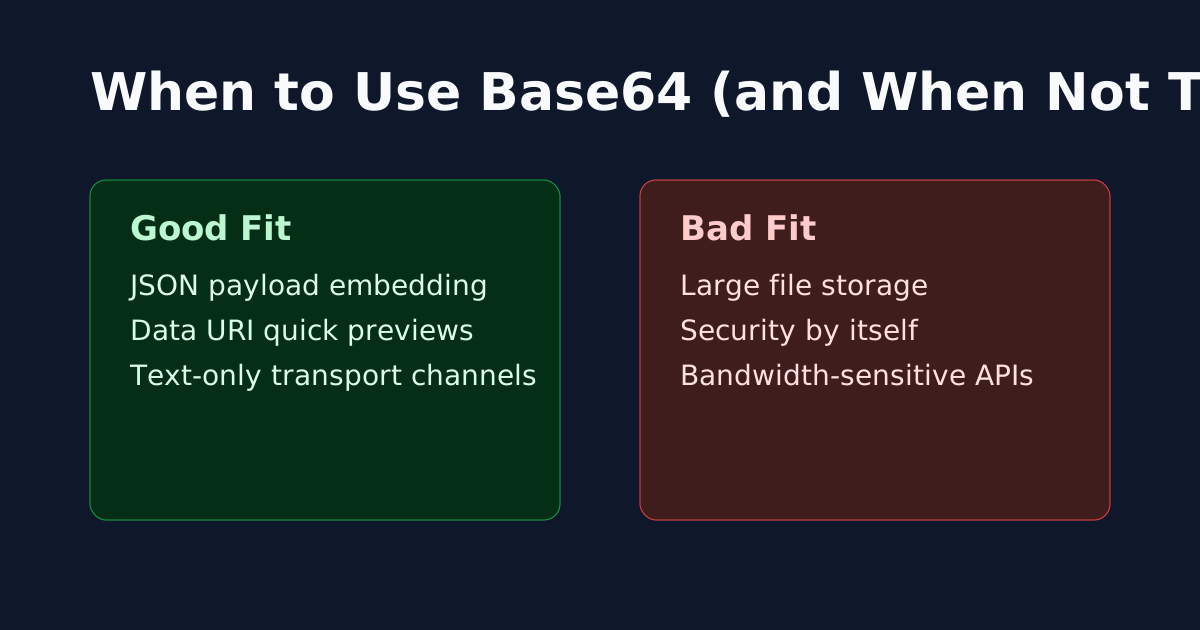
- Embedding small binary snippets in JSON.
- Moving bytes through text-only channels.
- Data URI previews for very small assets.
- Interop with APIs that explicitly require Base64.
Bad Use Cases
- Large file storage in database text columns.
- Performance-sensitive payloads where size matters.
- Any place where people expect "security."
- Replacing proper object storage/CDN workflows.
Performance Reality
If your original payload is N, Base64 output is about 4/3 * N.
You also pay CPU cost for encode/decode and memory overhead in clients.
Security Clarification
Base64 is not a lock. It is just a format.
If you need security:
- Use TLS in transit.
- Use encryption at rest.
- Use signed tokens where integrity matters.
Practical Rule of Thumb
Use Base64 when interoperability is the main requirement and payloads are moderate.
Avoid it when storage and network efficiency are more important.
Try It Yourself
Test a payload as raw bytes and Base64, then compare size and transfer time.